Showing posts with label David Sitek. Show all posts

Wednesday, January 19, 2011

TV on the Radio - Dear Science,


★★★★★ Tracks:

Halfway Home
Crying
Dancing Choose
Golden Age
DLZ

I pre-ordered TV on the Radio's third record in the summer of 2008 and couldn’t wait for it to arrive at my doorstep. What I immediately noticed when the needle hit the vinyl was they weren't content on playing it safe. The group continued to evolve with each passing record, using the increasing big label production budgets and studio technology at their disposal to recreate themselves all over again. Whereas Desperate Youth, Blood Sucking Babes is the sound of the urban sprawl and Return to Cookie Mountain is the "music you will listen to when the whole world burns up," Dear Science, (derived from a note Sitek wrote in the studio stating, “Dear Science, please start solving problems and curing diseases or shut the fuck up.”) is the dance party in its aftermath; a record even grander in scope and sleekness than its predecessor. Embracing their funk and electro-pop influences, Dear Science’s core is driven by a heavy dosage of percussion and multilayered vocals; their second single, “Dancing Choose,” finds Adebimpe bringing his rap skills to the table over a speedy off-kilter 4/4 drum beat, “Red Dress” is a full on funk explosion, complete with drum samples, bongos and blaring horns, and “Love Dog” pushes the beat to the forefront while Adebimpe questions and yearns for a God. Although Sitek’s guitars and samples aren’t as dominant here, his role as lead producer is unparalleled. If there is any ego to these guys it is contained in their quest to continually challenge music's boundaries.


Dear Science, not only finds TV on the Radio at their most resourceful but also their most playful. I’ve never delved in to Prince’s records but I can’t help but think a lot of songs were inspired out of his music when I hear the dance-inspired “Love Dog,” “Golden Age” and “Crying.” TVOTR has always embraced the funk but they've included more of their pop sensibilities here too, and with the help of a couple of strong singles, Dear Science, peaked at #12 on the Billboard charts, making this their most accessible record yet. With all that said I’m amazed by how many people haven’t given TV on the Radio a proper listen, or even heard of them. This record crosses so many genres I’d have a hard time believing anyone who couldn’t find something to like in it. My favorite song, and one that might just match “Staring at the Sun” as my favorite TVOTR track overall, is “DLZ.” Never a band to shy from social commentary, “DLZ” is riddled in criticisms of the great evil forces science has constructed and the politicians who wield them, Adebimpe speaks of “death professors” and “forcing fires” before he finally warns with his last line, “this is beginning to feel like the dawn of the luz of forever.”


DLZ was used at the end of an episode of Breaking Bad, which ended up being one of the best scenes of the season.

Thursday, January 13, 2011

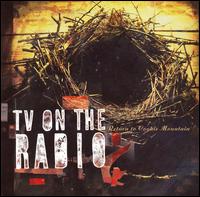
TV on the Radio - Return to Cookie Mountain


★★★★★ Tracks:

I Was a Lover
Hours
Province
Wolf Like Me
Dirtywhirl

The best story behind TV on the Radio’s Return to Cookie Mountain is hearing how David Bowie’s vocals ended up on “Province.” Sometime around 2003, Dave Sitek sold a painting to a man who happened to be Bowie’s doorman. During the exchange Sitek asked if the buyer might pass along a copy of the band’s demo to the illustrious songwriter, and not only did the doorman oblige, but Bowie took the time to listen to it and came out the other end a full-fledged fan. Shortly after TV on the Radio’s Young Liars EP was released, Sitek was at a gas station when he received a call. When the man on the other end claimed to be none other than David Bowie, Sitek promptly hung up the phone. The group apparently had a friend who liked to act out a lot of practical jokes and Sitek assumed this was one of them. Bowie had to call back two more times, finally stating, “No, I’m really David Bowie,” before the reality of it began to sink in. “He probably said some really important things that I was just too startled to pay attention to,” Sitek says.

Since then Bowie has advised the band in a number of ways, and when TV on the Radio finally began working on their landmark record Bowie joined the group in the studio to collaborate on a song of his choosing. When asked about the recording process of Return to Cookie Mountain, Sitek was quoted as saying he wanted to make “music you will listen to when the whole world burns up,” and nothing on the record ignites cataclysmic imagery more so than “Province” does, the song Bowie chose to collaborate on. The voices of Adebimpe, Malone, and Bowie blend apocalyptic metaphors with cautious words on the irrevocable path the country appeared to be headed under the Bush administration. Stirring underneath, a barren bass line and distant guitar melody explode in to a wall of sound at the chorus while all three of them begrudgingly croon, “hold your hearts courageously as we walk in to this dark place...” The dust eventually settles in to an eerie four note piano line.


Return to Cookie Mountain’s greatness has been written about everywhere, from being listed on countless “Records of the Decade” lists to being fully endorsed by some of the biggest recording artists ever. Not only is it critically acclaimed, but it also found TVOTR gaining mainstream traction, charting as high as #46 on the U.S. charts. The group quickly began appearing on shows like SNL and Letterman, rocking arenas and benefit concerts, and even contributing a downloadable track to the Rock Band series. It’d be difficult for me to pick a favorite TV on the Radio record, but if I had to recommend one it’d probably be Return to Cookie Mountain due to a few key tracks. “Province” has already been mentioned but “Wolf Like Me” is the catchiest of the bunch; another song that represents Adebimpe’s preference for imagery and metaphors over direct storytelling, carnal instincts towards lust and love predominate the lyrics he so ferociously spews. In the end though my favorite might just be the waltzy “Dirtywhirl,” one of the most intriguing, contemporary takes on old soul and doo-wop I’ve heard.

Wednesday, February 3, 2010

Yeah Yeah Yeahs - Show Your Bones

Release Date: March 27, 2006


Trying to put in to words what's wrong with Show Your Bones is difficult. I've been listening to it a lot over the past couple of weeks and I'm having troubles coming up with easy answers... Well, what's changed in the three years that separates the releases of Fever to Tell and Show Your Bones? One of the most obvious adjustments is made by Karen O, who has shed some of that aggressive, punk-angst she carried over the course of her earlier work in favor of a more mature approach to the vocals. It undoubtedly has a lot to do with the subject matter; this is Karen O's break-up album:
"I'm way out.
When you mean it on the inside you still can't get to me."

"Turn yourself around.
You weren't invited."

"Cheated by the opposite of love.
Held on high from up above."

"I've lost all reason from playing your games.
Better quit staring cause you're looking the same."
Lyrics were never the reason we were all listening to the Yeah Yeah Yeahs and that hasn't changed. They just aren't very good, and seriously undermines Karen's intentions of creating a more personal record. To make matters worse, the more serious approach to the vocals takes the fun out of what made Karen O so intriguing to listen to in the first place, which was that punk-rock personality she exuded in her songs and the aggressive delivery of those lyrics.

The sound has also changed. David Sitek of TV on the Radio fame, who did an excellent job in co-producing Fever to Tell with the Yeah Yeah Yeahs, was also asked to contribute to the production of Show Your Bones. The curveball is the addition of Squeak E. Clean, a DJ and producer who's scored commercials and worked with the likes of Maroon 5 and Kanye West. The newly-formed trio add more gloss and sophistication to the sound; removing distortion from Karen's voice, adding acoustic guitars to at least half the tracks, increasing the presence of bass guitar, and removing a lot of that dirty-edgy-rock sound that was prevalent earlier. Sophistication and garage rock don't often go hand in hand, and it results in a band that sounds like a watered-down, imitation of its former self.

I'm all for a band evolving; it would be a bore for the Yeah Yeah Yeahs to put out an album that sounds exactly like the first, but the steps they've taken in redeveloping their sound leave me uninterested. I'll keep a couple of the more engrossing tracks like "Cheated Hearts" and "I'm Way Out" but I'm sure I'll rarely listen to them. I'll be deleting the rest of the album, I only have 32gb to work with.

Wednesday, January 27, 2010

Yeah Yeah Yeahs - Fever to Tell

Release Date: April 29, 2003

★★★★★ Tracks:

Rich

Date with the Night

Black Tongue


If I'm listening to the Yeah Yeah Yeahs, it's usually when my wife is singing her favorite song included on Rock Band, "Maps," while I'm rocking the drums. I've always liked the song, and purchased the record soon after I heard the single in 2004. The album was also good but fell out of my rotation quickly, and as the years passed and the YYYs released more albums, I became increasingly uninterested. Everyone seems much more concerned with Karen O and her stage antics and what she's wearing than the band or the music. Instead of hearing their newest songs, I'm seeing Karen O on the latest cover of magazines like Spin or Nylon when passing the corner store. In short, I've always believed the Yeah Yeah Yeahs to be more style than substance. This along with what little I have heard from the latest album has made me all but give up on them. But the thing is, in revisiting their first album I realize all of that over-exposure has clouded my judgement.


Fever to Tell had me at Karen O's first bloodcurdling scream 45 seconds in to the first track, "Rich." I'll always have a soft spot for loud and abrasive vocals; being as I could never sing very well it became my primary role alongside guitar in all the bands I played in growing up -- the token screamer. Karen's got a helluva scream, and this shit rocks hard. "Rich" is followed by three more fast-paced tracks that rock no less before they finally tone it down a bit on "Black Tongue," where Karen trades guttural screams in for playfully, and even sexually, squealed "Uh-huhs." It's a lot of fun to hear Karen O's range, alternating from some of the more virile rock'n'roll tracks like "Date With the Night" and "Pin" to the softer "Maps" and feminine "Black Tongue."

After listening to Fever to Tell many times over the past couple of weeks I realize Karen O has always been the main attraction; the songs are built to showcase her persona. The groundwork was laid from the beginning for her to be the center of attention, but as the Yeah Yeah Yeahs have gained popularity and Karen O's status as a cultural icon has continued to increased, the quality of their music has continued to diminish. If you're like me and think the Yeah Yeah Yeahs have gotten worse with each passing album, do yourself a favor and go back and listen to their first; it will make you remember how much fun they were just a few years ago.