Showing posts with label david byrne. Show all posts

Wednesday, July 6, 2011

Talking Heads - More Songs About Buildings and Food


★★★★★ Tracks:
Thank You for Sending Me an Angel
With Our Love
The Good Thing
Artists Only
Take Me to the River


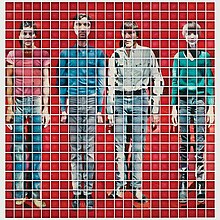
More Songs About Buildings and Food is easily my favorite ‘Heads record. The group is still in its rock’n’roll phase, but their sound is greatly enhanced with Brian Eno at the helm for the first time in what would prove to be a long, fruitful relationship between band and producer. Eno, still very early in his musical career, and riding the success in helping to shape the sounds of Bowie’s “Berlin Trilogy,” had a keen ear for the direction in which the ‘Heads were attempting to take their music. On Buildings and Food he doesn’t want to fiddle much with the sound but rather tinker with the way it comes to your speakers. He tightens up their studio sessions and therefore the quality of the songs themselves, he gives the guitars a bit of a mechanical feel, and allows the spastic, nervous energy the band creates to seep through the recording. The results are fantastic; 11 of the weirdest, grooviest tracks to come out of the 70’s. “Thank You For Sending Me an Angel” is the perfect opener, but “With Our Love” is the ‘Heads’s mission statement; a computerized, rinky-dink guitar charges ahead while David Byrne neurotically sings of the strange complexities of relationships between male and female.


The album culminates in what might be the best track of the album, a cover of Al Green’s “Take Me to the River.” The Talking Heads slow it down, strip it of its brass section, add a little synth, and Byrne adds his eccentricities to perfection. Alongside "Remain in Light" and "Burning Down the House," "Take Me to the River" would end up being one of the most recognizable songs the 'Heads ever produced.

Friday, June 24, 2011

Talking Heads - '77


★★★★★ Tracks:
Uh-oh, Love Comes to Town
New Feeling
The Book I Read
Psycho Killer


As creative as the Talking Head’s were when they started to implement afrofunk on Fear of Music and Remain in Light, I enjoy their earlier work a lot more, when they were a more straightforward rock’n’roll group. But even in the beginning I imagine the 'Heads are probably one of the first bands to be classified as ‘art rock.' While the label has always sounded rather pretentious, it just seems to make sense when identifying groups that write cerebral and strange lyrics or compose more complex instrumentation thank your average pop/rock outfit, or in the case of the 'Heads, both. And really, David Byrne seems like a pretty pretentious guy anyways. But as evidenced by ’77, the entire record being written by Byrne, he backs that arrogance up with some of the most unique music of the late 70's and early 80's.


The guitar work here is elaborate, and implements a bit of the funk they would further incorporate a few years later. Byrne talks a bit about the government (“Some civil servants are just like my family” in “Don’t Worry About the Government”) about every day problems (“they say compassion is a virtue / But I don’t have the time” on “No Compassion”), about how great he is (“I’m a know it all / I’m the smartest man around” on “Uh-oh, Love Comes to Town”), but one of the odd, most reoccurring themes is his fascination with social politics between men and women (“Girls ask and I define decision / Boys ask and I describe their function” on “Tentative Decisions”), and all of these lyrics further the image of the frontman as a rather distraught weirdo; the anxious, rambling voice the sound of a man who should be medicated. His neuroses are our gain though. And who doesn’t love to give it their all when singing “Psycho Killer” on Rock Band?

Thursday, June 16, 2011

Talking Heads - Remain in Light


★★★★★ Tracks:
Crosseyed and Painless
The Great Curve
Once in a Lifetime


When I play a Talking Heads record I inevitably think about how awesome it would have been to have been around during the CBGB heydays of the late 70’s. It was probably an intimidating scene, with a crowd made up mostly of social outcasts hoping to catch a glimpse of punk rock pioneers like the Ramones or Television or Patti Smith or Blondie (wow). With their business-casual attire and pretentious, artsy demeanor, the Heads must have been the oddballs of the bunch. They probably fit in much better with the white-collared Manhattanites surrounding them. Furthering the image, David Byrne’s nervous, edgy, even chaotic, vocal style makes him sound incredibly smart, but incredibly strange, as if his brain holds more information than one brain can capably handle. He sounds like what I imagine the late 70’s and early 80’s represented in general; it was the dawn of sensory overload. And while most of the CBGB crew were busy revolting against the changing times, the Heads and the music they created appeared to embrace the epoch of green-screened computers, fast-paced financial activity on Wall Street, and car-polluted freeways surrounding it. Perhaps though, the group was simply approaching the revolt in a different manner.

The first Heads song I heard was “Once in a Lifetime.” The video, one that got heavy MTV circulation even into the late 80’s, in a lot of ways introduces the audience to what the band is all about: the Heads’ frontman, a well-dressed David Byrne massaging his ego and exercising his creative control over the band, is the only member of the group to appear; it uses cutting edge analog and video effects for the time; the music is rhythmic and percussive but monotonous in melody; and Byrne’s vocals sound like an anxious stream of consciousness, a consciousness perplexed by the speed of which life can pass one by.


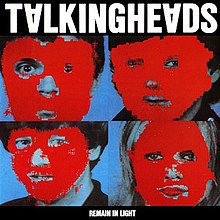
Ironically Remain in Light wasn’t recorded in the urban sprawls of America, but on the tropical shores of the Bahamas. Married and gaining success from their music, drummer, Chris Frantz, and bassist, Tina Weymouth, purchased an apartment in Nassau, where they quickly gained a fascination for Caribbean and African music. Byrne came down to visit the band soon after the purchase and they immediately began working on their next album, with the idea of heavily incorporating Afro beats, polyrhythmics, and reggae into the record. The finishing product remains true to the process. Every song here is uninflected in melodic structure, as the chord progressions never change throughout each song, but the rhythms are deep in multilayered percussion, and the songs build in strength as more instruments are gradually layered on top of one another. Phenom producer Brian Eno has a lot to do with this, as they essentially used a copy+paste method of recording loops and layers from the band's long studio jam sessions, but remember, this was before we had the convenience of digital music editors. A new method of recording music had been born and no one knew it yet. Always inspired by soul, the Talking Heads were now featuring the building blocks to rap and hip-hop in their music, and even though it took a trip to the Bahamas to inspire the group’s new approach, back in their hometown of New York City hip hop was already beginning to thrive. Perhaps some of this is pure coincidence, but Remain in Light nonetheless showcases how well their music epitomized the time.