Showing posts with label the Strokes. Show all posts

Tuesday, November 8, 2011

The Stills - Logic Will Break Your Heart


★★★★★
Tracks:

Changes Are No Good
Let’s Roll


The Stills first record sounds like The Strokes on an emo kick. Coincidentally I bought Logic WIll Break Your Heart during the same trip to the record store I bought Room on Fire, and I enjoyed the hell out of both of them some eight years ago. But while the second Strokes record has aged exceptionally well, the first Stills record has gone stale. Tim Fletcher sounds like he’s trying too hard. He writes gloomy, introspective lyrics; his defected, injured croon conjuring all your 80’s indie favorites (Morrissey, Robert Smith, Bernard Sumner) -- it’s hard to tell whether he takes himself too seriously or if he's on the conquest for groupies. Probably both. Just about anyone would hope being in a band would increase their chances of getting laid, but that should come naturally, I don't want to hear it in the music. Getting past Fletcher’s shortcomings will net you a few solid tracks though, my favorites being the depressing yet danceable “Changes Are No Good”, and the escapist “Let’s Roll”.

Wednesday, October 12, 2011

The Strokes - Angles


★★★★★
Tracks:

Taken For a Fool
Life is Simple in the Moonlight


First Impressions of Earth was a spectacular letdown, but because the first two Strokes records are so great I'll continue to give them chances. Most of us were amped for the first single we would hear in five years, and in some ways it shares commonalities with our favorite Strokes songs; the distorted vocals are back, the chorus is great and Fab is drumming with the same purpose he always has. But, where at one point the intricate weaving of duel guitars was the group's strength, they've developed a habit of trying to fit too many ideas into 3-minute pop tracks. The riffs throughout the intro and verse for "Under Cover of Darkness" are so exaggerated they undermine the overall quality of what could be a great song.

A few weeks after hearing that first single, but before the release of Angles, the Strokes performed on Saturday Night Live. They opened with a performance of the single they had been pushing for the past month, but the highlight was their closer. Always saving the best for last, the Strokes played the album's last track, “Life is Simple in the Moonlight.” It's one of their most unique song since Is This It. A ballad by Strokes standards, the melody flows naturally, and the restrained solo by Valensi hearkens to the discipline they harnessed in their prime. It surprises me in the least it’s one of two Casablancas solo compositions on Angles.

So there was hope again.

Unfortunately, after countless times streaming Angles upon its release, nothing matched the quality of “Life is Simple in the Moonlight.” One of the few highlights is “Taken For a Fool,” the closest thing you’ll find to Is This It or Room on Fire. The Tom Petty influenced “Two Kinds of Happiness” is surprisingly enjoyable but loses focus during its course. And for the few solid songs there are equal duds. “You’re So Right” follows the awful “Juicebox” approach to mechanical rock’n’roll, “Games” is something between a New Order and Madonna mash-up, with awful execution, and then there’s “Metabolism”, some sort of waltzy-gothy-indie concoction. The rest fall into comfortable mediocrity

The Strokes have gathered a lot of great ideas for an EP’s worth of material, but when stretched unnaturally over ten songs, Angles is disjointed, lacking a clear trajectory. By choosing "Under Cover of Darkness" as the album's first single The Strokes can't say they didn't prepare us adequately.

Thursday, October 6, 2011

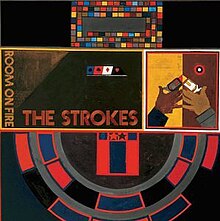
The Strokes - Room on Fire


★★★★★
Tracks:

Most of Them


Room on Fire is the perfect follow-up record to Is This It as far as I’m concerned. Why fix something that ain’t broke? Fuck all that noise about evolving and maturing -- the second time around should simply be about the continuation of writing great songs. And we get another collection of brilliant guitar-rock here; some of the riffs are even more intricate than anything on Is This It. A perfect example is the album’s second single, “Reptilia,” and The Strokes highlight as much with long camera shots on the fret work by both Albert Hammond, Jr. and Nick Valensi in the music video.

A few of my favorite Strokes songs are here. “12:51" is where were first introduced to the keyboard-effect Valensi implements throughout Room on Fire. One of my favorite traits about Casablancas as a lyricist is the humor and sarcasm he often includes in his songs, but he might even be fooling himself when he sings “Never needed anybody / Never needed nobody” on “Thin Line Between Love and Hate,” even if the bright two-chord progression suggests happiness. “Automatic Stop” features Hammond, Jr. pitching into the songwriting process for the first time. And as with Is This It The Strokes save the best for last in “I Can’t Win,” a simple little track about accepting failure.

Mila Kunis and Eva Mendes either trying to get their careers off the ground or fans of good music. Or both.

Tuesday, October 4, 2011

The Strokes - Is This It


★★★★★
Tracks:

All of Them


In 2001 my record collection was running on fumes. Most of that great music I had collected from the 90’s had been destroyed or stolen. All that was left was a tattered lot of punk and emo records, most of which were perpetuating my frequent foul moods. The mainstream landscape, being inundated by shitty “bling”-rap, bubblegum pop and agro hard-rock, was even worse. MTV was dying, the radio had been dead for years -- my one true hobby was becoming warily dull.

But then, in one of MTV’s last redeeming moments, a buzzworthy video unlike anything they had played in over a decade was aired. The quintet, ragged and dirty and appearing on a stage resembling classic bandstands or Ed Sullivan shows, seem a bit aloof, a bit distracted, some might even say a bit lifeless. But they looked cool as shit. And once Julian Casablancas begins with his distorted voice and nonchalant cadence, you realized rock’n’roll hadn’t been this danceable in decades. Nodding your head as Albert Hammond, Jr. throws us back with a great solo and Casblancas comes in with one last chorus -- “Last Nite” was a reminder music is supposed to be fun. In songs like “The Modern Age” and “Someday” Casablancas tells tales of heartbreak similarly to most of the sappy shit I was listening to, but he does it with sincerity instead of superficial earnestness, attitude instead of whiny self-pity. Perhaps The Strokes' strongest trait, the guitar interplay between Hammond, Jr. and Nick Valensi isn't necessarily masterful, but it's incredibly melodic and expertly written, my favorites of which can be heard on “Soma” and “Take It or Leave It.”

A whole new realm of music opened for me with the release of Is This It. I rediscovered a lot of great 70’s rock they had borrowed from. It turned out music didn’t need constant drum beats, hard rock breakdowns, or electronic blips and beats after all. Although, as Chavez stated in his Albert Hammond, Jr. solo post, The Strokes aren’t one of the most original bands, they completely reinvigorated the sound they pay homage to. I hadn't had that much fun listening to a record since being a teenager. I think most everyone felt the same way, and perhaps it wasn’t pretentious himpsterism that set The Strokes and indie revivalism in New York City in motion, but a conjuring of excitement for good music again.

Easily one of the best records of the past twenty years.

(Guided by Voices appearance in this video for extra hip points)

Wednesday, August 3, 2011

Surfer Blood - Astro Coast


★★★★★ Tracks:
Harmonix


Surf rock made a big comeback a few years ago, weaving its way into the indie arena, with California up-and-comers (Girls, Best Coast, Wavves) wanting to incorporate the sounds of the most renowned of California groups. Surfer Blood hails from the East Coast in Florida, where there’s more humid rain than ocean breeze and the waves aren’t all that great, but they wanted in on the beach party too. Astro Coast didn’t take much time to warm up to initially. “Floating Vibes” and “Swim” are the catchiest of tunes, mixing early 2000s indie rock (The Shins, The Strokes) with their surf influences. “Harmonix” is a personal favorite, its name coming from the harmonic sound one can make by just barely placing a finger on a string above a fret, and it’s those harmonic notes the song is built off of.

The bad news is I completely forgot about this record weeks after hearing it. It doesnt have much staying power, and I've now grown bored by a lot of the songs I liked initially. I’ll keep a couple of the stand-outs and most likely scrap the rest. But unfortunately for my home state, looks like California wins again.


Wednesday, May 11, 2011

Television - Marquee Moon


★★★★★ Tracks:
See No Evil
Venus
Friction
Prove It


They were mainstays at CBGB during its heyday in the late 70's, that was about all I knew of Television before their free Central Park show a few years ago. My wife and I walked in a bit late, bought our $12 beers, and watched them play what I now know is the title track to Marquee Moon. The song runs over ten minutes long, with an instrumental interlude spanning the majority of its playtime. They embellished on it live, and what felt like fifteen minutes in I was already finding myself pretty damn bored by the whole thing. It sounded like a garagey version of Phish, a sort of meandering piece of music that never found the hook it seemed to be searching for. Maybe everyone was tranced out or I missed the mushroom party, but the crowd appeared lifeless. The band lacked energy or any sort of stage presence, and at the time I thought these bros from the 70’s just didn't have much steam left in them. But maybe they were playing with heavy hearts. We stayed for a few more tracks and left disappointed.

Undeterred, I bought a copy of Marquee Moon a few weeks after the show. It floored me how immediate and infectious it was. About half way through a live performance I didn't understand the appeal but the opening riff to "See No Evil" left me wearing an unshakable grin. What phenomenal guitar play. I immediately thought of one of my favorite albums, The Strokes’ Is This It (insert typical hipster joke here); I could see Casablancas and Hammond, Jr. sitting around some years ago, picking apart the guitar licks on Marquee Moon while gathering ideas for the dynamic guitar interplay on their debut album some 25 years later. Television uses a dual left/right guitar approach (and as it is with most complex guitar bands, mono is not a good option when playing this record), sometimes layering as many as four and five guitars on to a track at once. Songs like “Venus” and “Friction” have guitar leads that last their entire lengths, mixing in multiple and frequent guitar solos. All too often the solo will sound like such a pretentious piece of shit in rock’n’roll music, but Television uses precision, allowing the solo to improve the overall structure of the song while simultaneously attacking its conventionalism, and they do so with confidence, not arrogance.


I admit I still skip over the sprawling “Marquee Moon” most times through, but damn if their live show didn’t give me a false impression, because Marquee Moon is rock'n'roll guitar virtuosity at its finest.

Friday, November 19, 2010

Vampire Weekend - Contra

Release Dates: January 11, 2010

★★★★★ Tracks:

Run

Cousins


I always get a kick out of indie rock outfits vying for position on the Billboard charts with mainstay mainstream artists like the Black Eyed Peas and Taylor Swift. It makes me proud of the greater American public for seeking out music other than the hits they’re force fed through...wherever the masses hear new music these days. The second single released, but the first song I heard from the new album was “Cousins.” Sounding similar to “A-Punk” or “Mansard Roof,” it had me thinking a repeat of Vampire Weekend was likely. However the rest of Contra is much more electronic and uses a wider array of instrumentation. The opening track incorporates a harmonium, a Kalimba thumb piano (the steel drum sound), synths, both electronic and classic-style drums and a few other foreign sounds. Strings and horns are much more common, and dominate tracks like “White Sky” and “Run.” Samples are used in “Dimplomat’s Son,” and vocals are used more as tonal compliments this time around. While all of this can be intriguing, I also think it detracts a little from what Vampire Weekend did so well in the first place; the skill at which they played their primary instruments and the knack they had for complex songwriting. Ezra Koenig’s voice is still the focal point, but he is more abrasive here than ever. He rhymes “Horchata” with balaclava, aranciata, and masada, he hoop and hollers on “Cousins,” and nothing released this year tests my patience more than the falsetto squeals of “White Sky.”

As its name could suggest, Contra has two opposing sides. The first half of the record is mellow, more experimental and atmospheric, while the latter songs quicken the pace and refocus on some of the band's original strengths. We get the album’s highlight in “Run,” which breaks down in to a frenzy of horns and percussion, “Cousins” is incredibly fast and quirky with a slick bass line, their most accessible song on the album in “Giving Up the Gun,” and the M.I.A. sampled “Diplomat’s Son” is a great reggae-infused piece. Were they able to repeat the energy of the second half throughout Contra, it would have had a lot more force. Regardless, the departure from their earlier sound has given Vampire Weekend much more room to work with in preparing for a third album. I see why Vampire Weekend would want to expand their sound. Nearly a decade ago indie rock to pop star icons, the Strokes, made a second album that sounded exactly like their first, and although it was fucking great, they ran out of ideas when they moved on to their third. Vampire Weekend might have set themselves up for longevity, but their first two records don’t match the soul or the hooks of their predecessors. In fact Contra isn’t much different than its neighbors atop the charts; good pop with a couple of great moments, but largely forgettable.

Thursday, September 9, 2010

The Walkmen - Lisbon

Release Date: September 14, 2010

★★★★★ Tracks:

Angela Surf City

Blue As Your Blood

Woe is Me


Now on their 5th proper full length, with a variety of additional songs and a cover of Nilsson's Pussy Cats record in between, the longevity of the Walkmen in the era of digital music is truly phenomenal. Often grouped in with garage rock revivalists the Strokes and the Yeah Yeah Yeahs, the Walkmen have outlasted and outproduced their Brooklyn brethren by a large margin. Sure, the Walkmen might not have a record as influential as Is This It or a personality as big as Karen O’s, but their entire body of work far surpasses that of either of those bands.

On Lisbon the Walkmen continue to tinker, drawing influences from 60’s surf rock while revisiting the sound they produced on A Hundred Miles Off. Paul Maroon’s guitar leads the charge, and he expertly invokes a hazy, lazy, summery feel to most the record with a heavy dosage of clean-tone electric guitar, adding a lot of chorus and reverb effects, and often plucking his notes at a slight delay to the pace of the rest of the music.

Songs “Angela Surf City” and “Woe is Me” are surf rock stand-outs, and there is a great do-wop throwback in “Torch Song," but the theatrical “Blue As Your Blood” is the most impressive track here; the Latin-tinged instrumentation gallops alongside Hamilton Leithauser’s lyrics of a Spanish lover in perfect unison.

Sunday, January 24, 2010

Yeah Yeah Yeahs - Self-Titled EP

Release Date: July 9, 2001

Stand-out tracks:

Art Star


The Yeah Yeah Yeahs, alongside bands like the Strokes, the Walkmen, and Interpol, were leading an important rock'n'roll revival in New York City when their self-titled EP was released in 2001. These artists are heavily influenced by garage rock, new wave and punk rock from the 70's, and in turn they are strongly influential to a majority of the indie rock being produced today. I hadn't been introduced to the Yeah Yeah Yeahs until most others probably were, when "Maps" was released as a single in early 2004. Picking up the self-titled EP a few years later, I heard the blueprint for their first full-length, Fever to Tell, which included that great single that would put them on the map. The EP isn't something I often listen to, but there is one song worth mentioning; "Art Star." If you want to hear the YYYs do their best impersonation of speed metal, with Karen O effortlessly mixing bludgeoning screams and do-do-do-do-dos within a moment's notice of each other, just click below.